- +919347179399
- contact@thetoothstoryhyd.com
- Mon-Sat: 9:00am-9:00pm | Sun: 9:00am-1:00pm

Restore your smile, chewing function, and confidence with dental implants—the gold standard for replacing missing teeth.
Book Appointment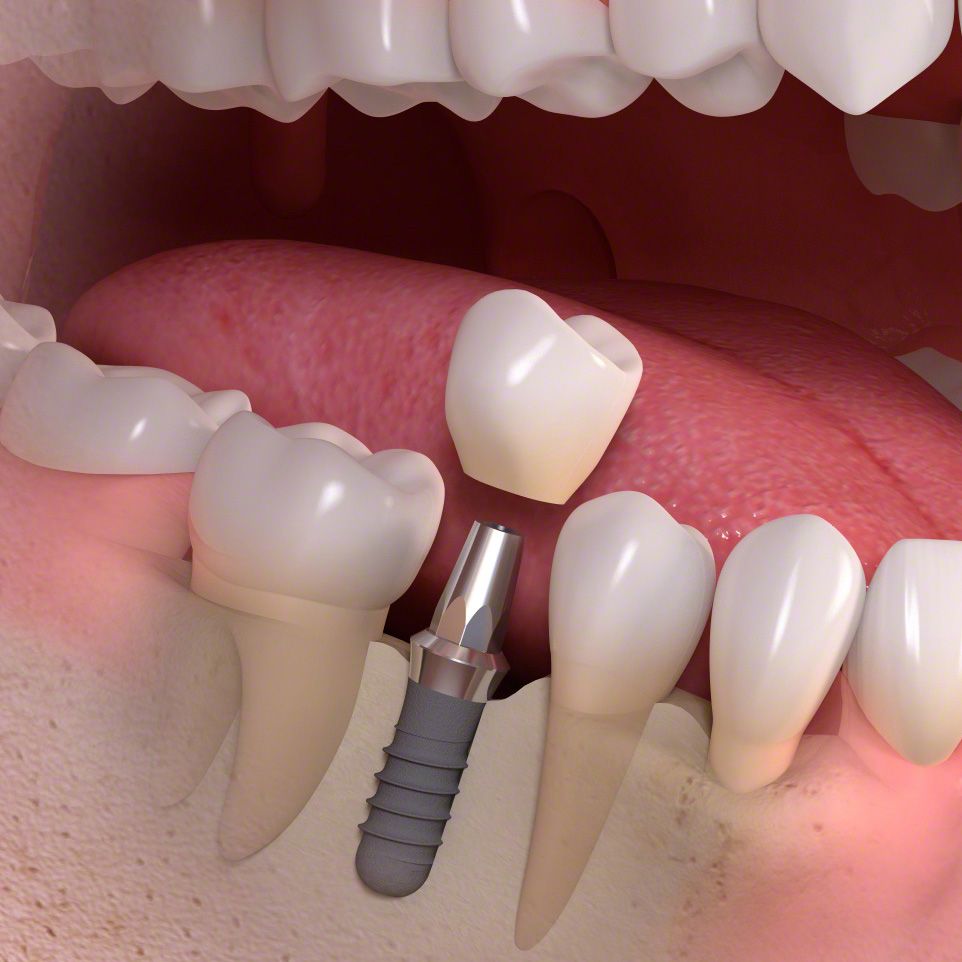
Dental implants are the most advanced, permanent solution for replacing missing teeth. An implant is a small, biocompatible titanium post that is surgically placed into the jawbone, where it functions as an artificial tooth root. Over time, the implant fuses with the bone through a process called osseointegration, creating a stable, durable foundation for a custom-made crown, bridge, or denture.
Unlike traditional tooth replacements such as removable dentures or bridges that rely on adjacent teeth for support, implants stand independently. They preserve bone structure, maintain facial contours, and provide the closest possible restoration to natural teeth in terms of function, comfort, and aesthetics.
Dental implant treatment is a multi-phase process that spans several months to ensure optimal outcomes.
Dental implants offer significant advantages over traditional tooth replacement options.
Dental implant treatment is a staged process that prioritizes predictability, comfort, and long-term success.
Your journey begins with a comprehensive consultation. Your dentist or oral surgeon will evaluate your oral health, review your medical history, and perform a CBCT scan to assess bone volume, quality, and proximity to vital structures. This imaging allows for precise treatment planning, often using computer-guided implant placement technology.
A personalized treatment plan is developed, outlining the number of implants needed, the type of restoration, the timeline, and any adjunctive procedures (such as bone grafting or sinus lifts). You will have the opportunity to review the plan, ask questions, and discuss costs and scheduling.
If bone volume is insufficient, bone grafting or a sinus lift may be performed. These procedures add bone to the jaw, creating a stable foundation for implants. Healing time for bone grafting is typically 4–9 months before implants can be placed.
On the day of surgery, local anesthesia is administered to ensure comfort. Sedation options are available for anxious patients. Using a precise surgical guide (if computer-guided planning was used), the implant is placed into the jawbone through a small incision in the gum. The gum is then sutured closed or a healing abutment is placed. The procedure typically takes 30–60 minutes per implant.
The implant is left to heal and integrate with the jawbone for 3–6 months. During this time, you may wear a temporary restoration to maintain aesthetics and function. Follow-up visits ensure proper healing.
Once osseointegration is confirmed, a second minor procedure may be performed to place an abutment (connector) on the implant. This step is often done under local anesthesia and allows the gum tissue to heal around the abutment, creating a natural emergence profile for the final restoration.
Impressions are taken to fabricate your custom crown, bridge, or denture. The final restoration is crafted in a dental laboratory with careful attention to color matching and fit. Once ready, the restoration is securely attached to the abutment. Your bite is checked and adjusted for comfort.
You will receive instructions for cleaning and caring for your implant. Regular follow-up visits are scheduled to monitor the implant, surrounding gum tissue, and restoration. With proper maintenance, your implant can last for decades.
Dental implants are suitable for most adults with missing teeth who have adequate bone density and healthy gums.